VTCKEY

Moving AI compliance from a final review to a first-line decision

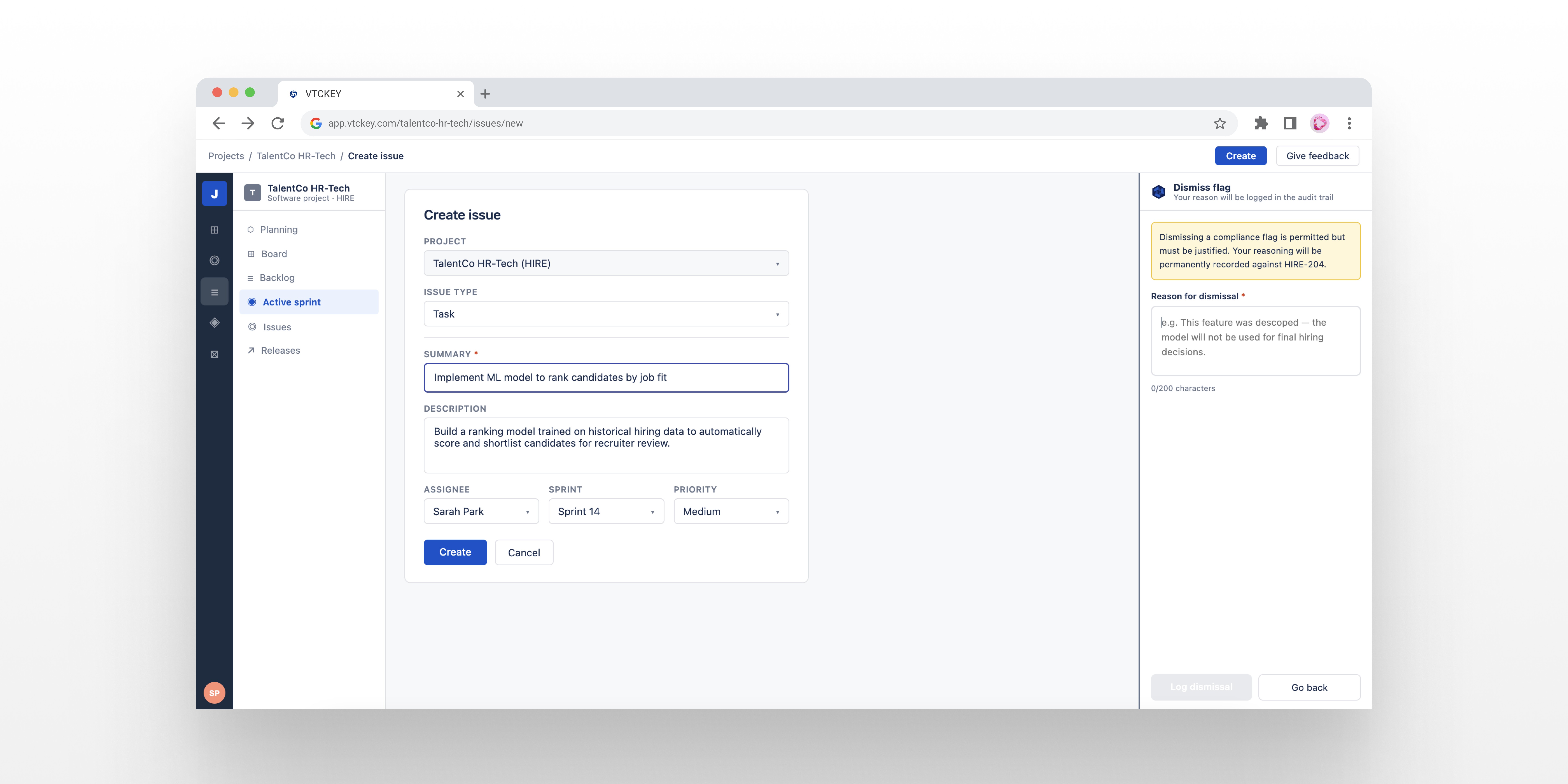
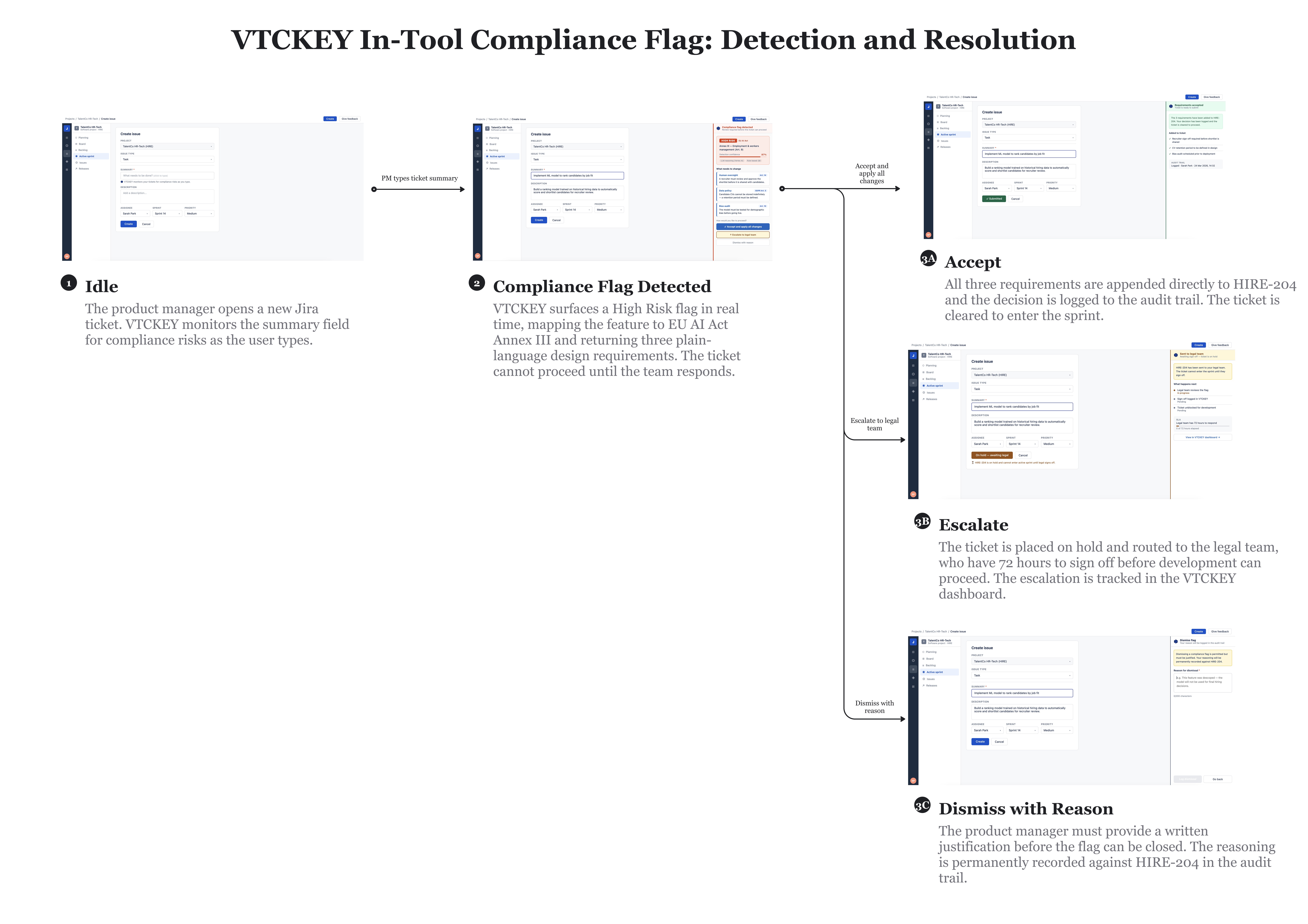
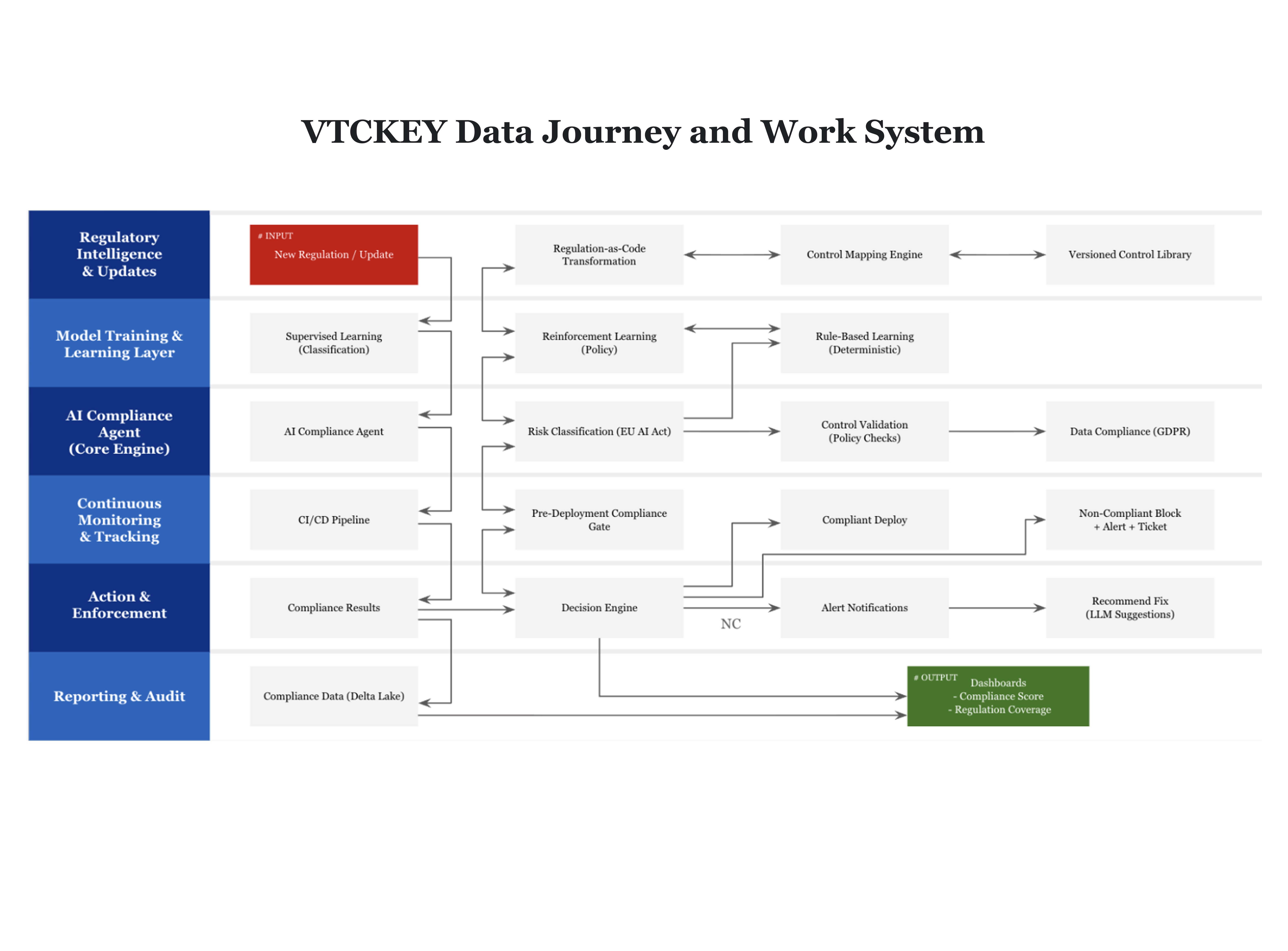
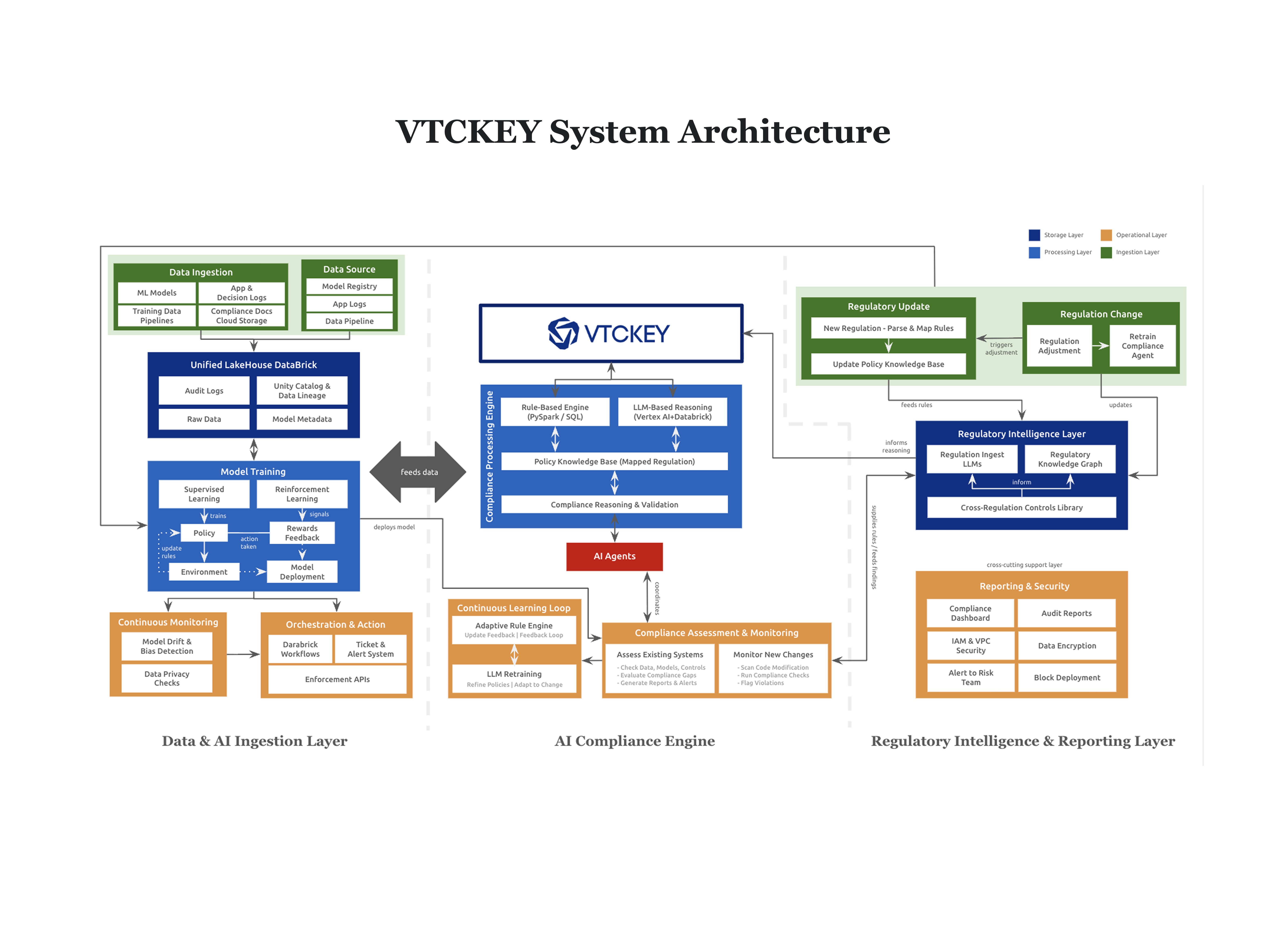
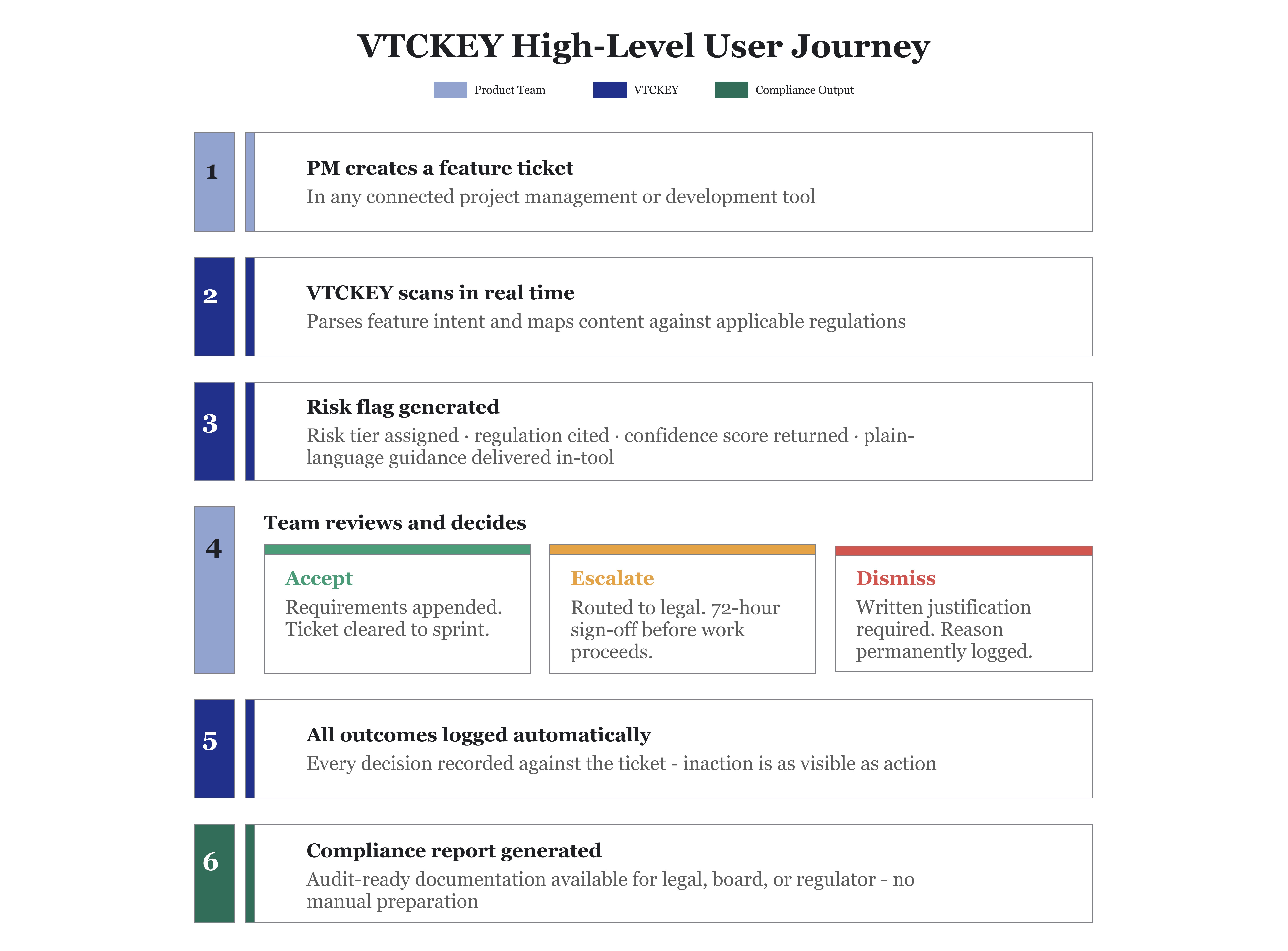
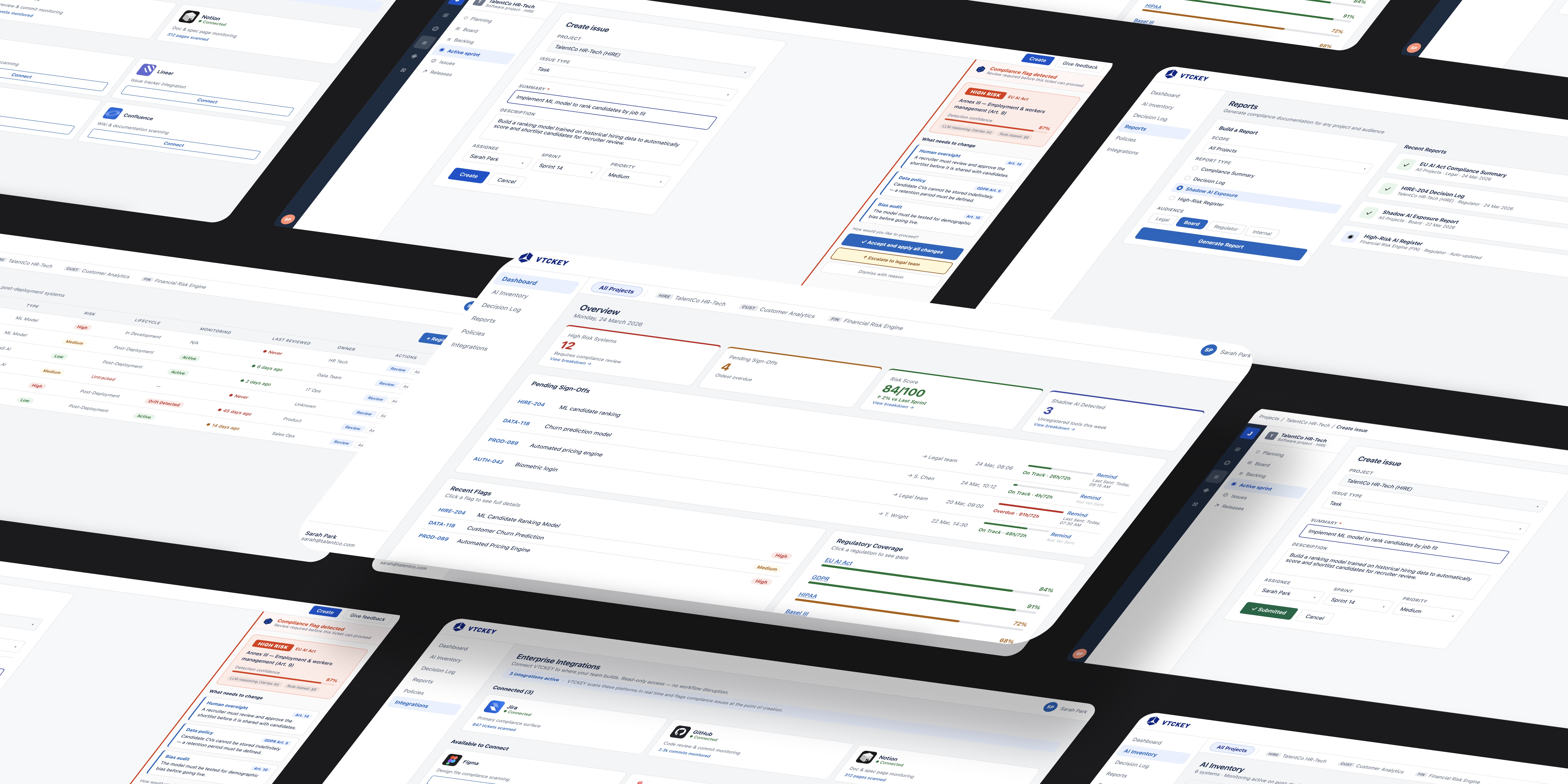
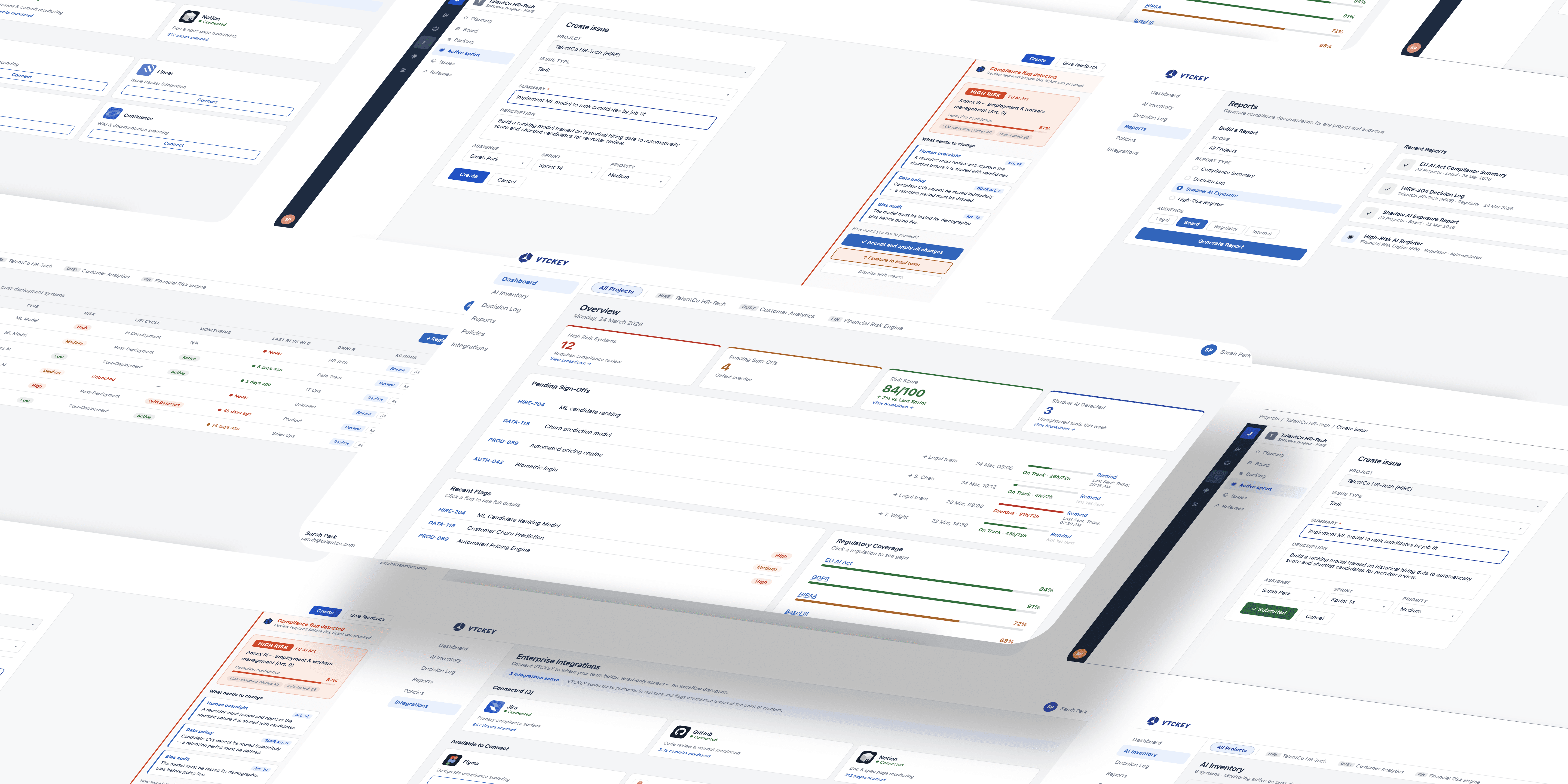
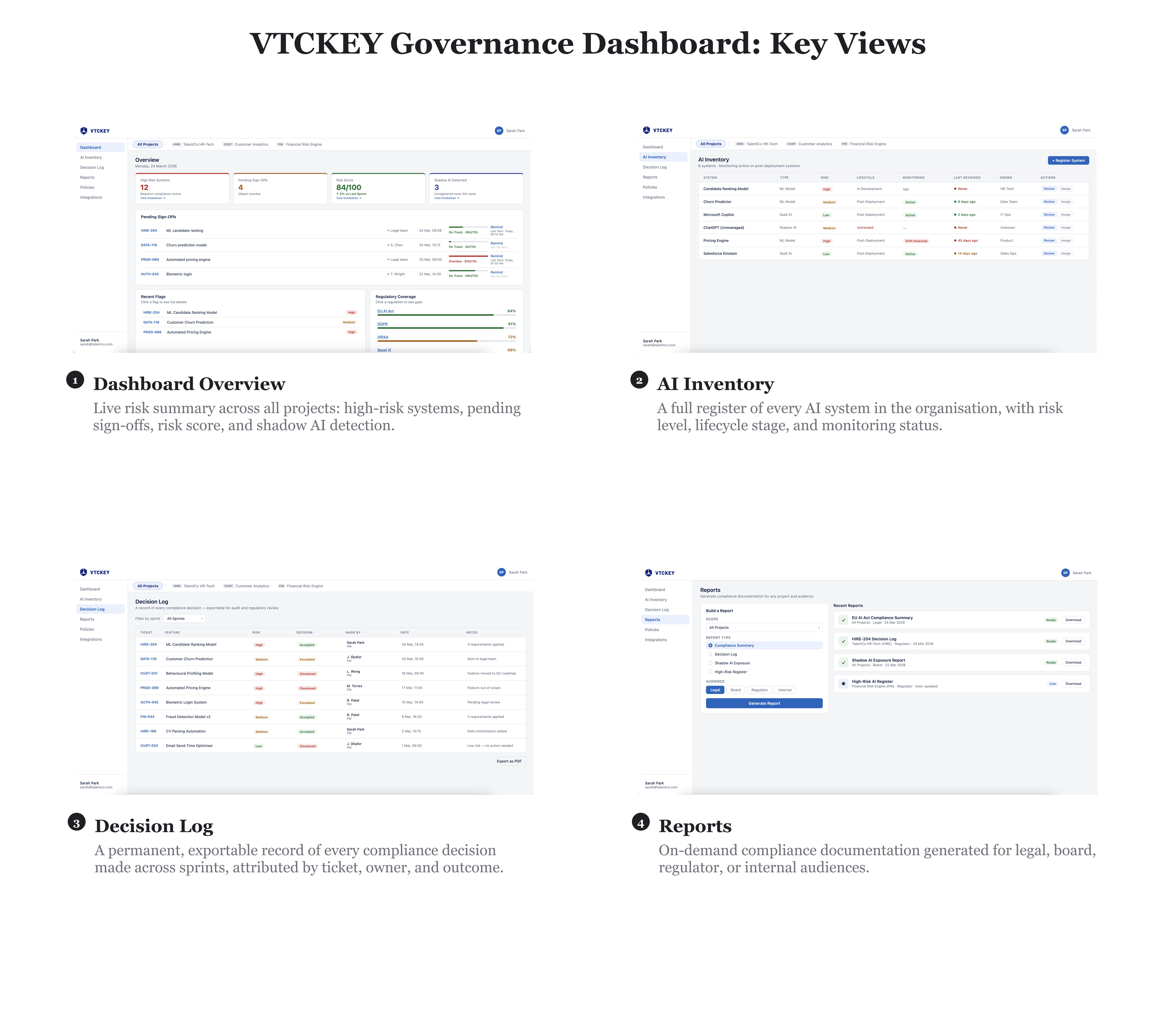
VTCKEY is an AI compliance governance platform built on one principle: compliance should be built in, not bolted on. Most organisations still treat governance as a final review, run after design decisions have been made and code has been written. By that point, fixes are expensive, political, or quietly skipped. VTCKEY embeds regulatory checks directly into the tools product teams already use, Jira, GitHub, Notion, Figma, surfacing risks at the moment a feature is being defined. I worked on this in the Managing AI course at LSE, as part of a six-person team. My contribution covered product strategy, user journey mapping, data visualisation of the technical and decision flows, product design through vibe-coding the prototype, parts of the business model, and the pitch deck.

Worked on:

Prototyping (Vibe Code), Product Strategy
In details:
Challenge

The market has plenty of AI governance tools, but they all sit in the same place: separate dashboards, run by legal, used after the fact. That's the wrong place. Product managers, engineers, and designers make the decisions that actually create regulatory risk, but they don't see a regulation until someone in legal raises it weeks later. Pulling them into a separate compliance workflow doesn't work either, mid-market teams using Jira and GitHub will not adopt a second tool for a job they don't believe is theirs. The real design question wasn't how to build a better compliance dashboard. It was how to put a compliance decision in front of the right person at the moment the decision is still cheap to change.

Challenge

The market has plenty of AI governance tools, but they all sit in the same place: separate dashboards, run by legal, used after the fact. That's the wrong place. Product managers, engineers, and designers make the decisions that actually create regulatory risk, but they don't see a regulation until someone in legal raises it weeks later. Pulling them into a separate compliance workflow doesn't work either, mid-market teams using Jira and GitHub will not adopt a second tool for a job they don't believe is theirs. The real design question wasn't how to build a better compliance dashboard. It was how to put a compliance decision in front of the right person at the moment the decision is still cheap to change.

Solution

Solution

Results

Results